
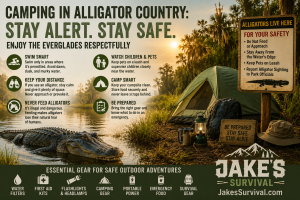
 I was swimming in a pond yesterday in the Everglades. A woman frantically yelled at me that there are alligators. I told her that I know and that I’m OK. I was OK. The alligators never came near me. People swim every day knowing that there are alligators around, just like people swim every day at the beach, even though there are sharks around. Therefore, I decided to write this week’s blog about staying safe in alligator-infested waters.
The Everglades is one of America’s most unique wilderness areas. Its rivers, marshes, ponds, and wetlands are home to countless species of wildlife, including the American alligator. Seeing an alligator in its natural habitat is one of the highlights of visiting South Florida, but it’s important to remember that these are wild animals and deserve both respect and caution.
At JakesSurvival.com, we believe that enjoying the outdoors safely starts with understanding the environment around you.
Although alligators are powerful predators, they generally avoid people. Most spend their days basking in the sun, resting in the water, or quietly hunting fish, turtles, birds, and other natural prey.
Problems are more likely to occur when alligators:
The best safety strategy is to give them plenty of space and let them remain wild.
If you choose to swim, do so only in areas where swimming is allowed and where local authorities have determined it is appropriate. Posted signs and park regulations exist for a reason.
Avoid swimming:
If you see an alligator:
A good rule of thumb is that if an alligator changes its behavior because of your presence, you’re too close.
Feeding alligators is illegal in Florida and dangerous for both people and wildlife. Once an alligator begins associating humans with food, it becomes more likely to approach people, creating unnecessary risks and often resulting in the animal being removed or euthanized.
Small children and pets resemble the size of some of an alligator’s natural prey.
If you’re camping or visiting the Everglades:
When camping:
A clean campsite helps avoid attracting unwanted wildlife.
The Everglades is a remarkable wilderness, and preparation helps make every trip safer and more enjoyable.
At JakesSurvival.com, you’ll find dependable outdoor and emergency gear, including:
Whether you’re exploring the Everglades, hiking, camping, or preparing for emergencies, the right equipment helps you enjoy the outdoors with confidence.
One of the best parts of visiting the Everglades is seeing wildlife in its natural habitat. Respecting animals from a safe distance protects both you and them.
Remember:
Millions of people safely enjoy Florida’s lakes, rivers, and parks every year. The key is understanding that alligators are wild animals and behaving accordingly. By staying alert, respecting their space, and following local guidance, you can greatly reduce the risk of an unwanted encounter.
Preparedness isn’t about fear—it’s about knowledge, awareness, and making smart decisions outdoors.
Visit JakesSurvival.com for survival gear, camping equipment, emergency supplies, water filtration systems, and outdoor essentials to help you stay prepared for your next adventure in the Everglades or wherever the trail leads.
