
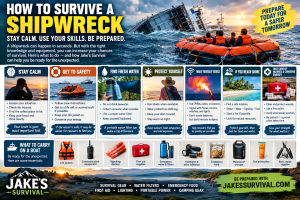
 A shipwreck is one of the ultimate survival situations. You may suddenly find yourself in the water, on a life raft, or stranded on a remote shoreline with limited food, water, and equipment.
The good news is that preparation, knowledge, and staying calm can dramatically improve your chances of survival.
At JakesSurvival.com, we believe the best time to prepare for an emergency is before it happens. Whether you’re heading out on a boat, camping near the coast, or preparing for an unexpected disaster, having the right survival equipment can make a tremendous difference.
A shipwreck is terrifying, but panic can cause you to make dangerous decisions.
Take a moment to assess your situation. Ask yourself:
Your brain is one of your most important survival tools. Think before you act.
If the vessel is sinking, burning, or otherwise becoming unsafe, follow the crew’s emergency procedures and get into an approved life raft or other survival craft when instructed.
If you end up in the water, keep your life jacket on and conserve energy.
If the vessel remains afloat and reasonably safe, it may be easier for rescuers to locate a large vessel than an individual person in the water.
After a shipwreck, fresh water can quickly become more valuable than food.
Do not drink seawater. The salt content can make dehydration worse.
Rain can provide an important source of fresh water. If you have containers, bags, or other suitable equipment, collect rainwater whenever possible.
A portable water filter can also be valuable if you eventually reach a freshwater source. Remember that many ordinary filters are not designed to desalinate seawater, so you need equipment specifically intended for the water you’re trying to treat.
At JakesSurvival.com, water filtration and preparedness equipment can be part of a larger emergency kit.
Exposure can become a serious problem at sea.
If you’re on a life raft or small boat, use whatever appropriate shelter is available to protect yourself from direct sunlight. Keep your skin covered, conserve water, and avoid unnecessary physical activity during the hottest part of the day.
At night, temperatures can change dramatically, so use available clothing and shelter to maintain a comfortable body temperature.
Being rescued is usually your primary objective.
If you have access to emergency equipment, use it according to its instructions. Depending on the vessel and situation, this might include:
Don’t waste batteries unnecessarily, but don’t hesitate to use emergency signaling equipment when appropriate.
If you make it to shore, your priorities change.
First, assess the area. Look for a safe location away from surf, unstable cliffs, flooding, and other hazards.
Then consider:
Shelter → Water → Signaling → Food
Don’t immediately spend all your energy searching for food. Protection from the elements and finding safe drinking water are generally much more important early in a survival situation.
Even a minor injury can become a major problem when you’re stranded.
A waterproof first aid kit can help you clean and protect wounds and deal with common injuries until professional help arrives.
If someone has a serious injury, prioritize emergency signaling and evacuation rather than trying to solve everything yourself.
When you’re stranded, every calorie and every drop of water matters.
Avoid unnecessary swimming or traveling unless you have a clear reason. If you’re in a life raft, don’t abandon it simply because land appears distant unless there is a compelling safety reason and you have assessed the situation carefully.
Survival is often about patience.
You can’t predict exactly what will happen, but you can prepare for common emergencies.
Depending on the trip and vessel, consider having access to:
Make sure required safety equipment is appropriate for your vessel and meets applicable regulations.
The ocean is beautiful, but it can change quickly. Weather, waves, currents, cold water, dehydration, and distance from assistance can turn a routine boating trip into a serious emergency.
Before leaving shore, tell someone your plans and expected return time. Check weather and marine conditions, make sure your communication equipment works, and know how to use your emergency equipment before you need it.
At JakesSurvival.com, we focus on helping people prepare for emergencies and outdoor adventures. Our survival and preparedness supplies can complement the safety equipment you already carry on your boat or keep in your emergency kit.
From water filtration and emergency food to first aid, lighting, portable power, and camping supplies, having useful equipment readily available can give you more options when normal systems aren’t available.
Surviving a shipwreck isn’t about being fearless. It’s about staying calm, protecting yourself, conserving resources, signaling for rescue, and making smart decisions.
The ocean can be unpredictable, but preparation doesn’t have to be.
Before your next boating or coastal adventure, take the time to learn basic marine safety and make sure your emergency equipment is ready to go.
Prepare before you leave shore. Stay calm when things go wrong. And visit JakesSurvival.com for survival gear and preparedness supplies to help you stay ready for the unexpected.
