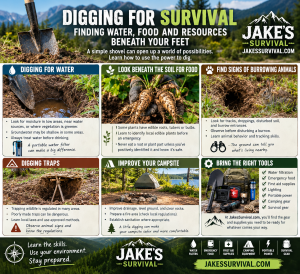
When you’re in a survival situation, one of the most useful abilities you can have is the ability to dig. A shovel, entrenching tool, or even a sturdy digging stick can open up possibilities that aren’t obvious at first glance.
You might be able to search for water, uncover edible roots, improve your campsite, or identify where animals are living. At JakesSurvival.com, we believe survival is about having the right equipment and knowing how to use the environment around you.
In some environments, water may be hidden beneath the surface.
Areas near rivers, lakes, seasonal streams, and damp low-lying ground can sometimes contain shallow groundwater. Vegetation can also provide clues that moisture is present below the surface.
However, digging does not guarantee you’ll find drinkable water. Groundwater can contain bacteria, parasites, chemicals, or other contaminants.
If you locate water, treat it appropriately before drinking. A portable water filter can be an extremely useful part of your survival kit, although you should always understand exactly what your particular filter removes.
Digging can also reveal natural foods that aren’t visible above ground.
Depending on your location and season, certain plants produce edible roots, tubers, or bulbs. Learning to identify local edible plants before an emergency occurs can give you another potential food source.
But there’s an important rule:
Never eat a root, tuber, bulb, or other plant part unless you’ve positively identified the species and know that the specific part is safe to eat.
Many poisonous plants have edible-looking roots or resemble harmless species.
The ground can also tell you what’s living nearby.
Tracks, droppings, disturbed soil, tunnels, burrow entrances, and gnawed vegetation can reveal the presence of animals such as rabbits and other small mammals.
Rather than immediately disturbing a burrow, take time to observe it. Look for fresh tracks and other signs that indicate whether an animal is actively using the area.
Understanding animal behavior and learning to track wildlife are valuable wilderness skills.
Historically, people have used excavated traps and other methods to capture small game. However, trapping wildlife is heavily regulated in many places, and poorly constructed holes can also injure people, pets, and non-target wildlife.
Instead of relying on improvised traps, learn the hunting and trapping regulations for your area and, where legal, use approved equipment and methods.
The bigger survival lesson is learning to recognize where animals travel and how to identify their signs. That knowledge can be valuable whether you’re simply observing wildlife, hunting legally, or practicing wilderness skills.
Your digging ability isn’t limited to finding food and water.
A good digging tool can help you:
Always consider the environment before disturbing the ground and follow local regulations.
One reason digging tools deserve a place in a preparedness kit is their versatility.
A compact shovel or entrenching tool can perform many different jobs without taking up much space. Combine it with a water filter, first aid kit, emergency food, lighting, and other essentials and you have a much more capable preparedness kit.
At JakesSurvival.com, you can find survival and emergency supplies designed to help you prepare for unexpected situations, including:
The real value of digging isn’t simply moving dirt. It’s understanding what the landscape is telling you.
Water may be suggested by vegetation and terrain. Wildlife may be revealed through tracks and burrows. Plants may provide food when properly identified. And a simple digging tool can help you take advantage of opportunities that would otherwise be difficult to access.
Practice these skills during normal camping and outdoor trips rather than waiting for an emergency.
Being able to dig can give you options when you’re outdoors. From searching for potential groundwater and identifying edible roots to reading animal signs and improving a campsite, a simple shovel can become one of the most versatile pieces of survival equipment you own.
Just remember that water must be treated, wild plants must be positively identified, and hunting or trapping wildlife must follow local laws and regulations.
Prepare your equipment. Learn your environment. Build your skills.
Visit JakesSurvival.com for survival gear, water filtration, emergency food, first aid supplies, camping equipment, and other preparedness essentials.