When you’re in the mountains, water can be one of your most important survival priorities. Streams, springs, and other natural water sources may be available—but knowing how to recognize a promising source and make that water safer to drink is essential.
At JakesSurvival.com, we believe preparedness starts with knowledge. If you’re hiking, camping, or facing an unexpected emergency in the mountains, understanding where to look for water can make a tremendous difference.
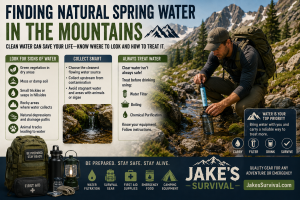
Natural springs often occur where groundwater reaches the surface. When searching for water, pay attention to areas where the terrain naturally channels water downhill.
Look for:
Following a mountain’s natural contours downhill can sometimes lead you toward a creek, seep, or spring.
If you have several options, flowing water is generally preferable to stagnant water. However, clear-looking spring water isn’t automatically safe to drink.
Groundwater can contain microorganisms or other contaminants that you can’t see, smell, or taste.
That’s why finding water is only half the job.
Before drinking water collected from a spring, creek, or other natural source, treat it using an appropriate purification method.
Depending on your equipment and the situation, options can include:
A filter can be especially convenient when you’re traveling because it can reduce the need to carry large quantities of water.
Keep in mind that not every filter removes every type of contaminant. Know what your particular filter is designed to handle and follow the manufacturer’s instructions.
If you’re collecting water from a natural spring or stream, don’t simply scoop water from the first puddle you find.
Look for the cleanest accessible point, preferably where water is emerging or flowing before it has passed through areas where animals congregate.
Avoid water that has:
When possible, collect water upstream from obvious sources of contamination.
In a survival situation, people sometimes focus immediately on finding food. But water is generally a much more immediate priority.
That’s why every mountain adventure should include a way to carry and treat water.
At JakesSurvival.com, you can find preparedness equipment designed to help you stay ready, including portable water filters, emergency supplies, first aid equipment, camping gear, and other survival essentials.
Even if you know how to find natural water, don’t depend entirely on finding a spring when you head into the mountains.
Bring water with you and carry a reliable way to treat additional water if necessary.
A compact water filter can take up far less space than carrying enough water for an extended emergency.
Consider keeping water-treatment equipment in your hiking pack, camping supplies, and emergency preparedness kit.
The best time to learn about mountain water sources isn’t when you’re already lost, exhausted, or dehydrated.
Practice identifying natural water sources during normal camping and hiking trips. Learn how your water filter works before you need it. Understand how to boil and safely store treated water.
Preparedness turns an emergency problem into a problem you already know how to handle.
Mountain environments may contain more natural water than you realize, but finding it safely requires observation, patience, and preparation.
Look for natural drainage patterns, vegetation, springs, streams, and other signs of groundwater. Most importantly, never assume that clear mountain water is automatically safe to drink. Treat natural water before consuming it.
Your knowledge is one of your most valuable survival tools, and the right equipment can help you put that knowledge to work.
Visit JakesSurvival.com for portable water filters, survival gear, camping equipment, first aid supplies, emergency food, and preparedness essentials to help you stay ready for your next mountain adventure.